← PROJECTS · 04
H₂Automatic vehicle detection & fueling authorization
Technology comparison & system design for a hydrogen refueling operator.
RESULT
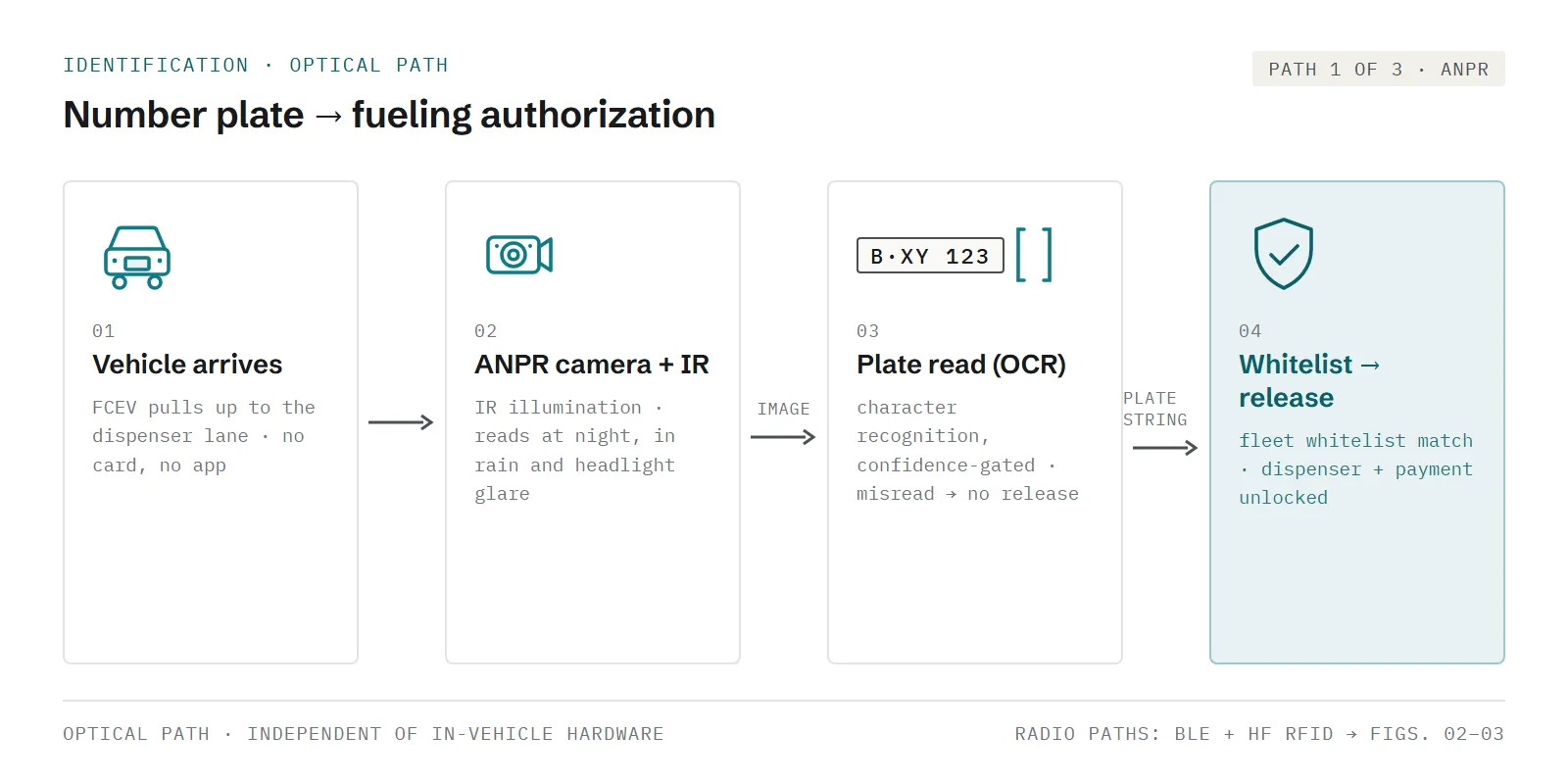
ANPR with a smart recognition model proved the most accurate path; it needs a clear field of view and a mount that covers both small cars and large trucks.
THE CHALLENGE
Fleet drivers lose time on authorization at the dispenser: cards fail, apps need accounts. The operator wanted fueling to start the moment a known vehicle arrives; the open question was which identification technology does that most reliably.
Beyond reading a plate or a tag, every candidate had to authenticate against the whitelist on the authentication server and survive the edge cases: two vehicles arriving at once, vehicles on both sides of the dispenser fueling at different pressure levels, and re-authentication when an aborted fueling restarts.
WHAT I BUILT
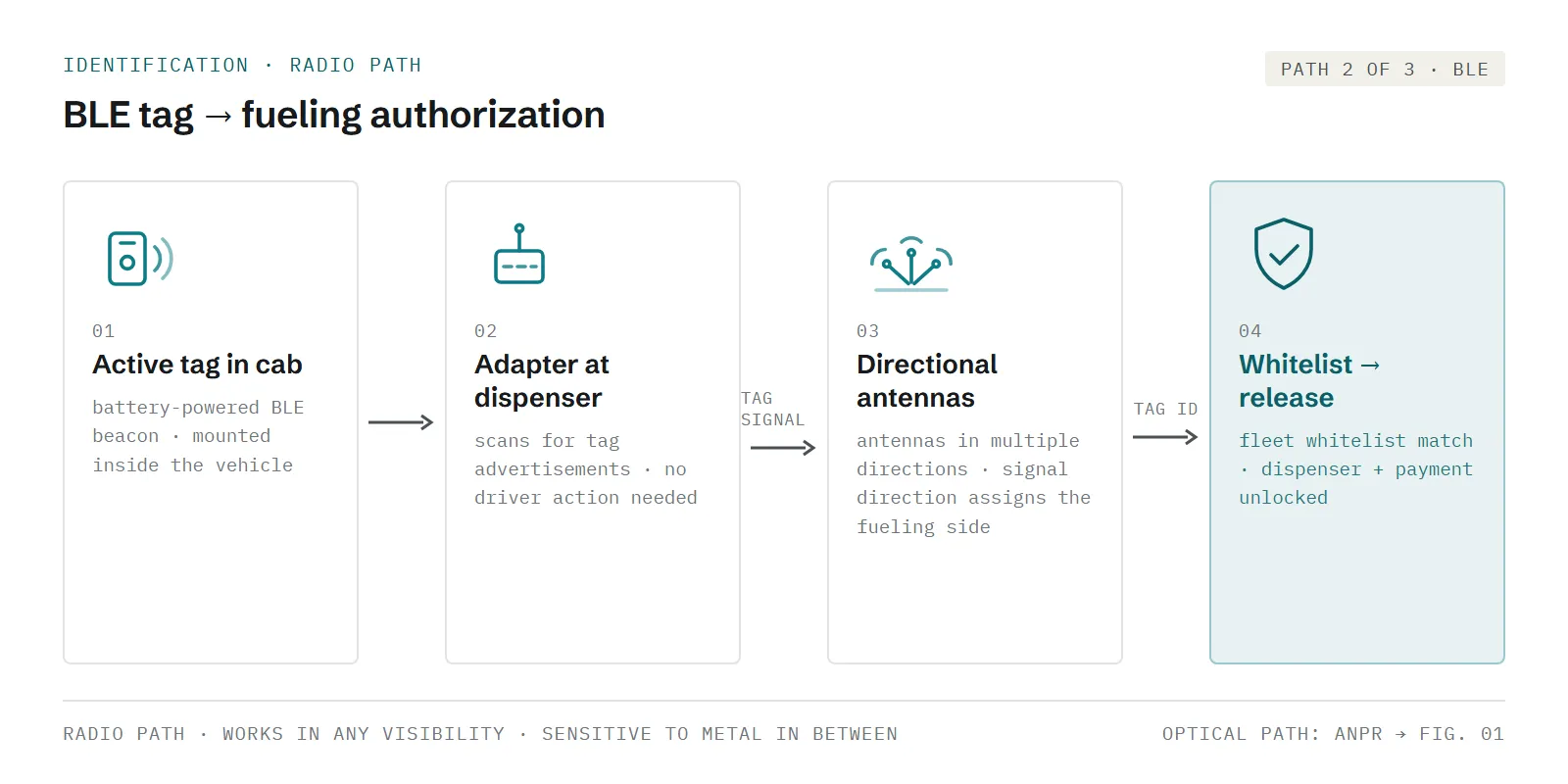
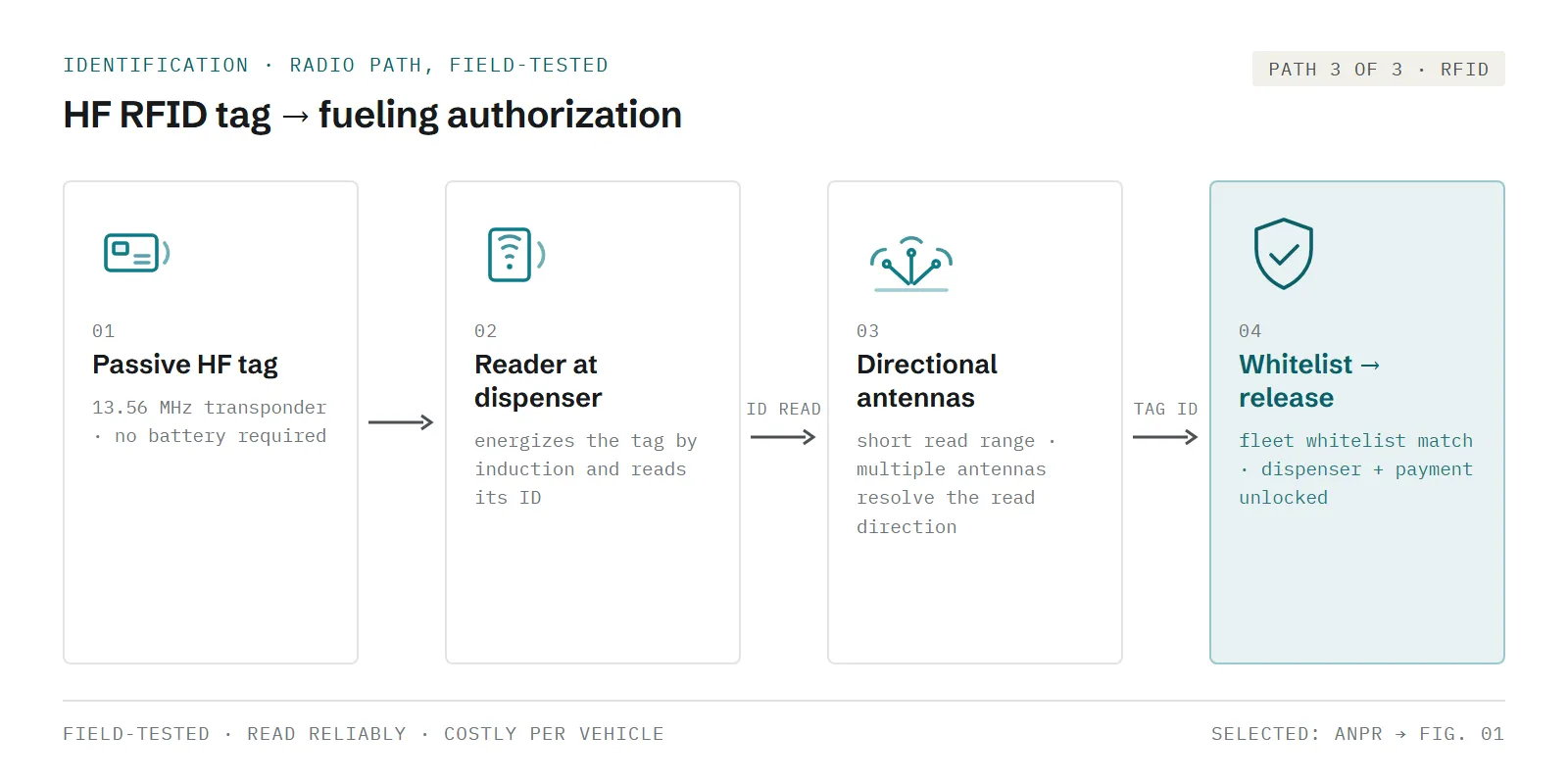
I tested and compared three identification paths against the same authentication server: an ANPR camera with IR illumination, active BLE tags, including a variant with an activation button, and HF RFID.
Locating the vehicle mattered as much as detecting it: multiple antennas pointing in different directions tell left from right for BLE and RFID; BLE channel sounding estimates distance, but only holds up with an unobstructed view.
WHAT CHANGED
BLE works but loses reliability with metal between tag and antenna; HF RFID read dependably but was too costly per vehicle.
The comparison closed with a clear technology recommendation and tested handling for simultaneous arrivals, two-sided dispensers and re-authentication.