← PROJECTS · 05
H₂Compressor health monitoring & prescriptive maintenance
Concept study with working prototype, developed independently, not client work.
PROTOTYPE RESULTS
The prototype combines recorded compressor signals into component health scores and maintenance recommendations.
TO VALIDATE IN A PILOT
A pilot would test whether the recommendations identify faults early enough and reliably enough to schedule maintenance. Reduced downtime and longer component life have not yet been demonstrated.
THE CHALLENGE
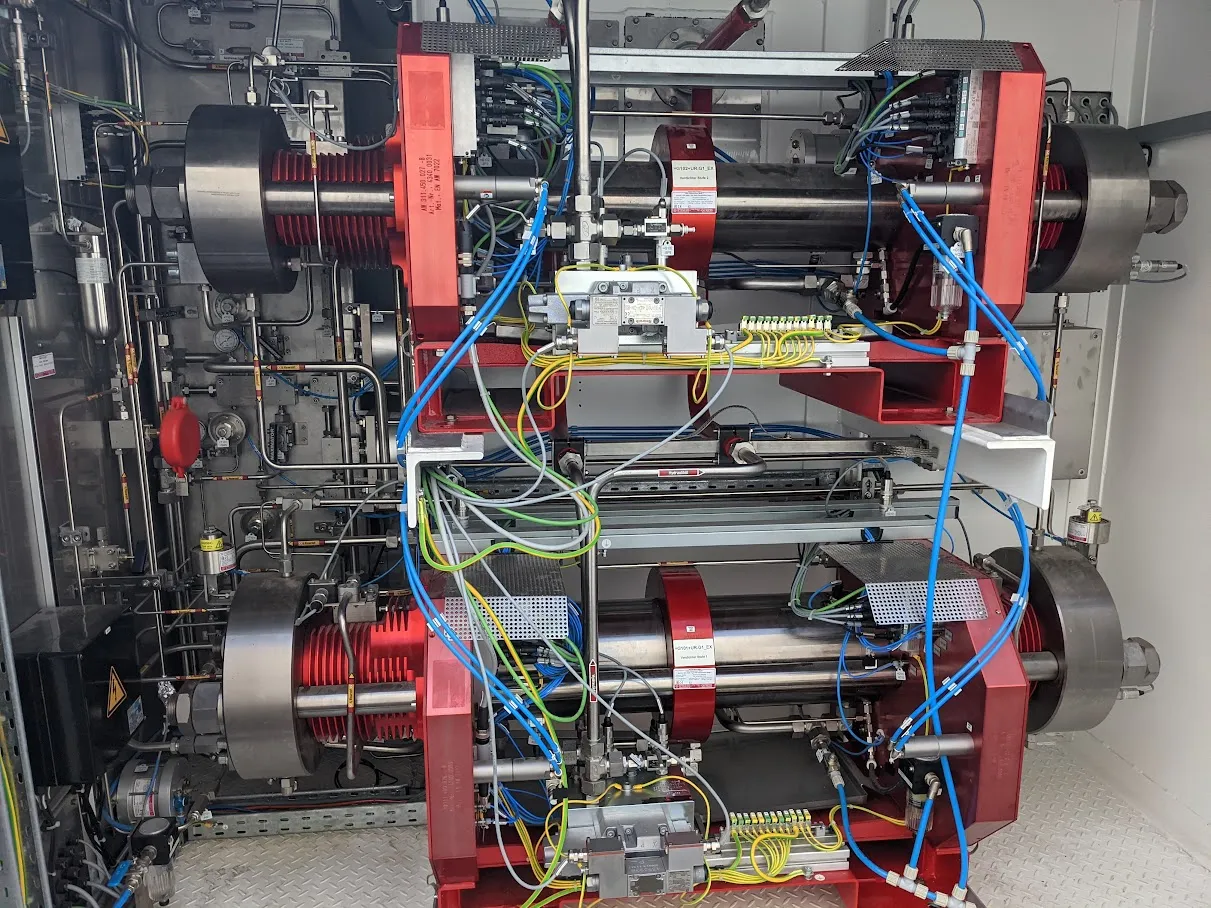
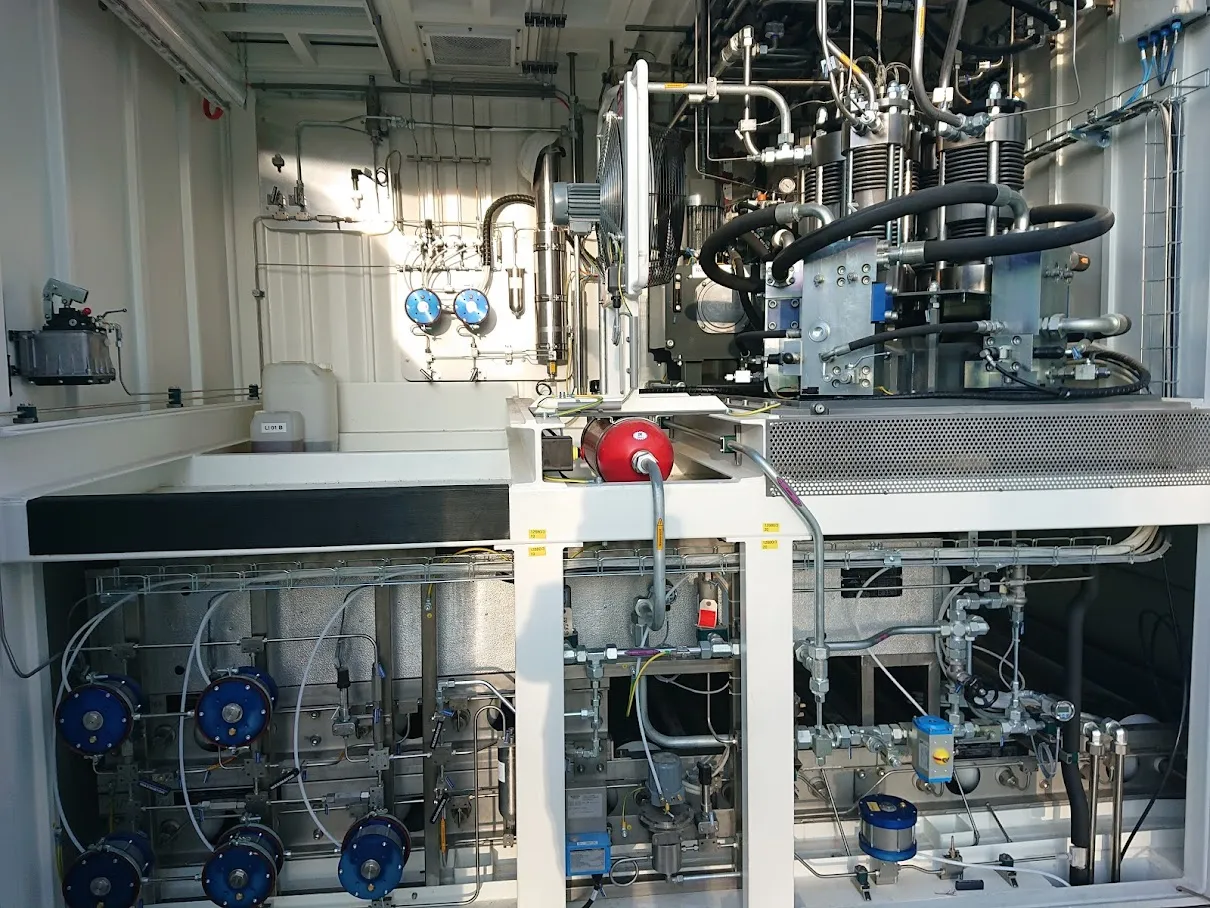
The compressor is the most failure-prone and most expensive machine at a hydrogen station; when it trips, the station is offline. Yet maintenance still runs on fixed hour intervals: healthy parts get replaced, worn ones fail before the interval says so.
The warnings exist: bearing wear in vibration spectra, leaking valves in stage temperatures and ultrasound, ring wear in creeping energy consumption, but the signals sit in separate systems and nobody reads them together.
WHAT I BUILT
The concept starts with instrumentation: accelerometers on bearings and cylinders, an ultrasonic sensor for valve leakage, per-stage pressures and temperatures, motor power; every channel published over MQTT into a time-series database.
Python analysis turns vibration into spectra where bearing defects, imbalance and misalignment are individually identifiable, scores valves from stage pressure ratios and discharge-temperature deviation, and baselines power per operating point, so drift means wear, not load.
A dashboard condenses everything into per-component health scores and a concrete recommendation: which component, which action, which maintenance window, ranked by failure risk instead of run hours.
PROTOTYPE RESULTS
These outputs still need validation against inspections and known faults on an operating machine.
Status: working prototype on recorded data; ready for a pilot.